

What is a Caliphate? An Analysis of its History and Contemporary Examples: The Two Sides of a Coin
- Roberto Arnaiz
- 13 oct 2024
- 4 min de lectura

The concept of the caliphate has been one of the most influential forms of Islamic governance throughout history, uniting both the political and religious spheres under the authority of a caliph. Today, caliphates continue to capture political imaginations and debates, both in their glorious history and in the more controversial versions that have emerged in modern times. In this article, we will explore what a caliphate is by comparing the example of the Caliphate of Córdoba in ancient Spain with the attempt to establish a modern caliphate by Al-Qaeda in Iraq.
For those who wish to delve deeper into the Caliphate of Córdoba and its influence on the history of Spain, I recommend my book Ecos de España: A Journey Through Time and Soul. And for those looking to understand the roots and consequences of Al-Qaeda's attempt in Iraq, I invite you to read Middle East: The Truth, where I thoroughly examine the geopolitical and religious context of the Middle East.
What is a Caliphate?
A caliphate is an Islamic system of governance led by a caliph, considered the successor of the Prophet Muhammad in both religious and political realms. The caliph is viewed as the leader of the Muslim community, with the mission to implement Islamic principles in all aspects of public and private life. Throughout history, caliphates have been central to the expansion of Islamic civilization and the consolidation of territories under a common rule.
Historically, caliphates have been vast empires that not only ruled over large territories but also promoted cultural, economic, and scientific development, as was the case with the Caliphate of Córdoba.
The Caliphate of Córdoba: Splendor in the Iberian Peninsula
One of the most important and emblematic caliphates in history was the Caliphate of Córdoba, established in the 10th century by Abd al-Rahman III. In 929, this ruler declared Córdoba's independence from the Abbasid Caliphate of Baghdad and proclaimed himself caliph, founding one of the most glorious periods of Islamic history in the Iberian Peninsula.
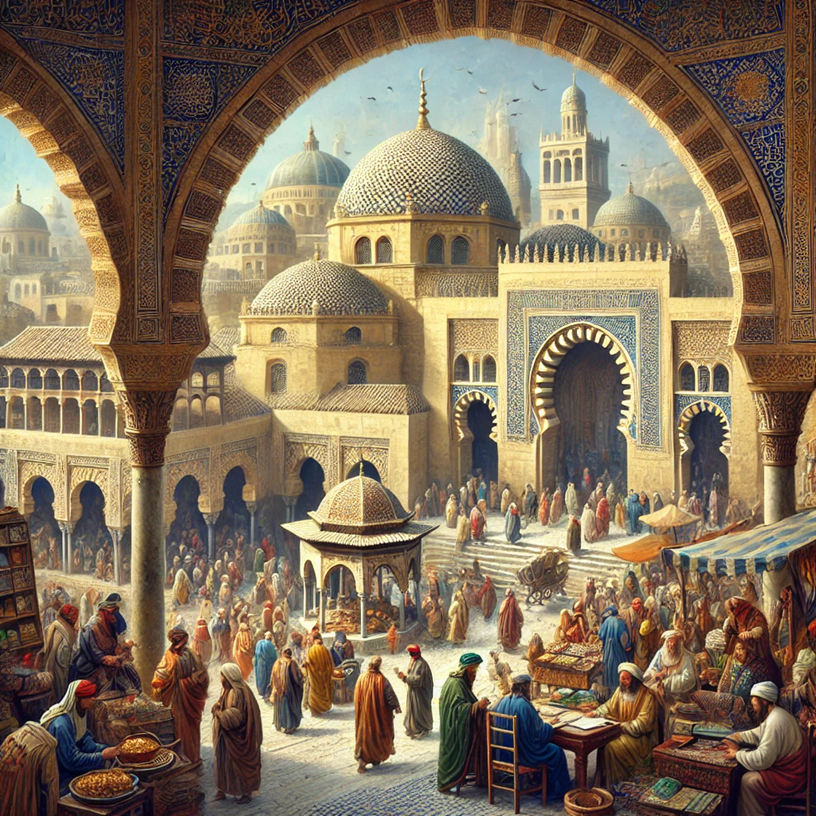
The Caliphate of Córdoba was not only distinguished for its political and military power but also as a center of culture and science. Under its reign, Córdoba became one of the most advanced cities in Europe, known for its grand mosque, its academies, and libraries. In this caliphate, Muslims, Jews, and Christians coexisted in relative peace, allowing for an unprecedented exchange of knowledge and cultural flourishing.
The history of the Caliphate of Córdoba reflects a period of prosperity and development, but also of internal tensions that, in the early 11th century, led to its disintegration into smaller kingdoms known as "taifas." This collapse facilitated the subsequent Christian reconquest of the peninsula.
If you wish to explore more about the importance of the Caliphate of Córdoba and its legacy in Spanish history, I invite you to read my book Ecos de España: A Journey Through Time and Soul, where I analyze this crucial period for understanding the cultural mix that defines Spain to this day.
Al-Qaeda and the Caliphate in Iraq: The Contemporary Version
In stark contrast to the Caliphate of Córdoba, Al-Qaeda's attempt to establish a caliphate in Iraq in the 2000s was radical and violent. This group, initially led by Abu Musab al-Zarqawi, sought to create a caliphate based on an extremely strict interpretation of Islamic law (Sharia), rejecting anything it considered Western or modernizing influences.
Al-Qaeda in Iraq, and later the Islamic State (ISIS), aimed to overthrow established governments and replace them with an Islamic state governed under a radical version of Sharia. Unlike the Caliphate of Córdoba, which promoted culture and science, this modern caliphate was based on extreme violence, oppression, and terror.
In 2014, ISIS formally declared a caliphate in the territories it had captured in Iraq and Syria. However, its brutality, terrorist attacks, and human rights violations led to an international military intervention that ultimately resulted in the downfall of its self-proclaimed caliphate. This modern attempt to create a caliphate not only devastated the affected regions but also left a deep mark on international politics.
If you want to understand in depth the rise of this modern caliphate and how it connected to the conflict in the Middle East, I recommend my book Middle East: The Truth. There, I examine the historical, religious, and geopolitical roots of these events and their impact on the global stage.
Conclusion
The concept of the caliphate has been interpreted in very different ways throughout history. The Caliphate of Córdoba is an example of cultural splendor and coexistence in the Iberian Peninsula, while Al-Qaeda's attempt to establish a caliphate in Iraq represented a radical and destructive version of this institution. Both examples highlight the extremes of the potential of a caliphate: on one side, cultural advancement, and on the other, the use of the caliphate as a pretext for violence and control.
To explore these topics further, I invite you to read Ecos de España: A Journey Through Time and Soul to understand the legacy of the Caliphate of Córdoba, and Middle East: The Truth to examine how contemporary radical ideologies have sought to reinterpret this concept in the context of the 21st century. The history of caliphates remains relevant, and its analysis is key to understanding current challenges in the Islamic world and beyond.


Comentarios